Cross-Channel Marketing: Best Practices For 2025
16 MIN READ
DIGITAL · 21 Dec 2025 · 17 minUse data to select authentic GCC influencers, localize bilingual content, prevent fake followers, and measure ROI with CPA and ROAS.
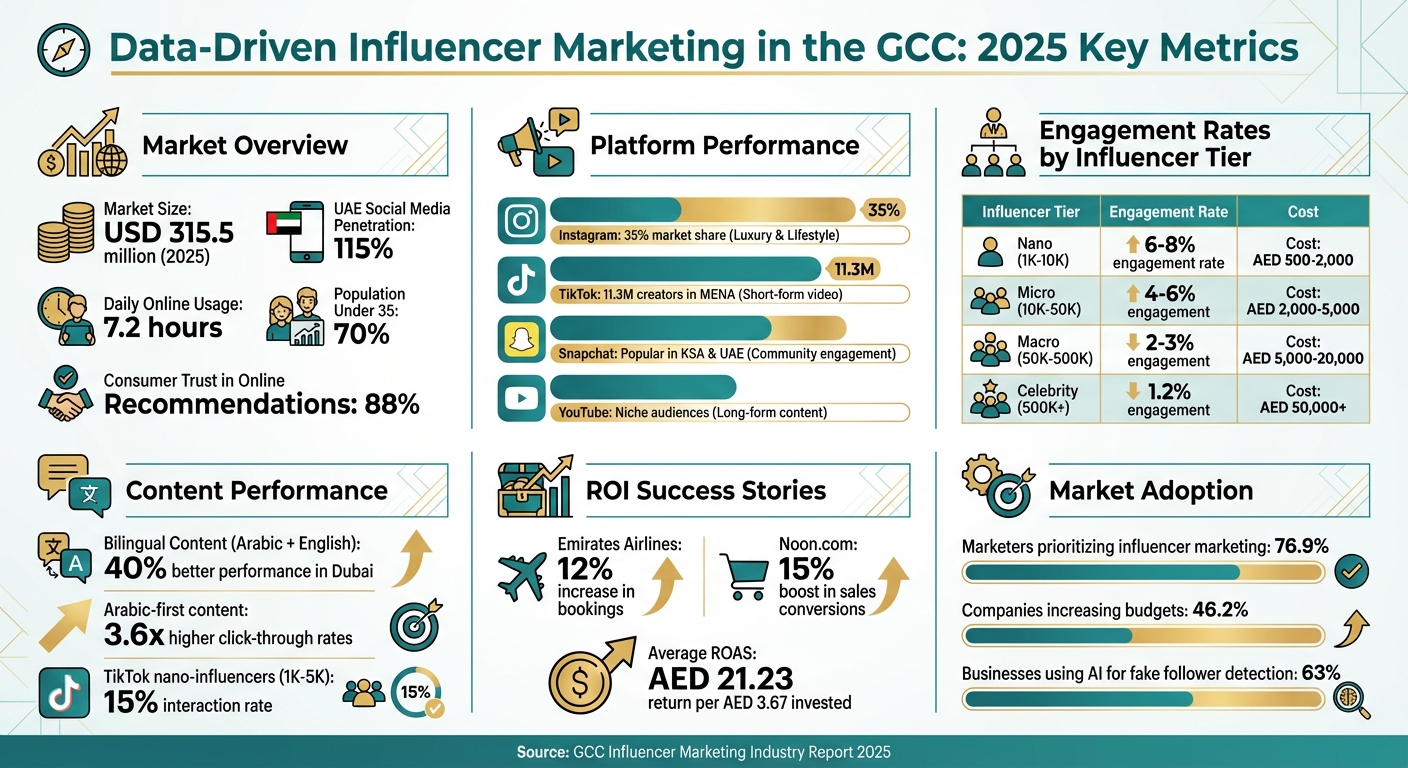
In the GCC, influencer marketing is booming, with the market reaching USD 315.5 million in 2025. The UAE leads the way, where social media penetration exceeds 115%, and users spend an average of 7.2 hours daily online. Key factors driving this growth include a young, mobile-first audience (70% under 35) and high trust in influencers - 88% of consumers trust online recommendations as much as advice from friends or family.
However, success depends on data-driven strategies. Choosing influencers based on follower count alone isn’t enough. Brands must analyze engagement quality, audience demographics, and past campaign performance to identify the right creators for their target markets. Platforms like Instagram, TikTok, and Snapchat dominate the region, but preferences vary by country and audience. For example, bilingual content (Arabic and English) performs 40% better in Dubai’s diverse market.
Data also helps brands avoid pitfalls like fake followers and engagement pods, ensuring campaigns deliver measurable ROI. For instance, Noon.com achieved a 15% boost in sales conversions by leveraging niche influencers and precise data. Metrics like Cost Per Acquisition (CPA), Return on Ad Spend (ROAS), and sentiment analysis are essential for tracking success and improving campaigns.
To thrive in the GCC’s influencer marketing landscape, brands need to focus on localized content, compliance with regulations (e.g., UAE influencer licenses costing AED 15,000 annually), and measurable business outcomes. Data transforms influencer marketing into a reliable growth tool, proving that thoughtful, well-analyzed campaigns drive results.
GCC Influencer Marketing Statistics and ROI Metrics 2025
To choose the right influencers and gauge campaign success in the GCC, you first need to grasp the available data and how to access it. The region comes with its own set of challenges, from the need for bilingual content to differing platform preferences among various nationalities. By using the right data sources, you can cut through the noise and focus on influencers who truly resonate with your audience. Let’s explore the essential data sources, platform trends, and quality concerns specific to the GCC.
Start with native platform analytics. Tools like Instagram Insights, TikTok Analytics, and YouTube Analytics provide fundamental data, such as follower demographics, engagement rates, and content performance. These free resources are a good starting point for evaluating an influencer’s reach.
But native analytics only scratch the surface. For a deeper dive, third-party tools like influData, AnyTag, and Socialbakers are invaluable. These platforms can identify fake followers, analyze audience overlaps, and even conduct sentiment analysis of comments in both Arabic and English.
Hannah Sollé, Teamlead Influencer Marketing at hi!share.that, notes: "The best foundation for successful influencer marketing is data. InfluData allows marketers to easily see accurate assessments of key KPIs".
Social listening tools add another layer of insight by tracking brand mentions and trending hashtags in real time. They monitor conversations in both Arabic and English, helping you spot influencers already discussing topics relevant to your brand. Some advanced platforms even alert you to spikes in negative sentiment, allowing you to address issues before they escalate. These tools are essential for finding influencers who drive real engagement and deliver measurable results.
If you’re looking for direct connections, influencer marketplaces like Snapchat Creator Marketplace can link you with verified local creators. These platforms simplify the discovery process and often include performance data to help you make informed choices.
Social media preferences in the GCC vary widely, and understanding these differences is crucial for shaping your data strategy. Instagram leads the way with a 35% market share, making it the go-to platform for luxury, fashion, and lifestyle campaigns. It’s particularly effective for macro-influencers and high-quality visual storytelling.
TikTok, on the other hand, is the region’s fastest-growing platform, dominating the nano-influencer space. With 11.3 million creators across the MENA region compared to Instagram’s 1.9 million, TikTok offers unmatched reach for short-form content. The launch of TikTok Shop in Saudi Arabia and the UAE in February 2025 has further transformed it into a direct sales platform, simplifying ROI tracking from discovery to purchase.
Snapchat enjoys massive popularity in Saudi Arabia and the UAE, especially for private, localized community engagement. Meanwhile, YouTube caters to niche audiences with a preference for long-form, narrative-driven content and detailed product reviews.
| Platform | Primary Strength in GCC | Best For |
|---|---|---|
| Visual storytelling, luxury, fashion | Macro-influencers, lifestyle campaigns | |
| TikTok | Short-form video, viral trends, Gen Z reach | Nano-influencers, direct social commerce |
| Snapchat | Private, localized engagement | Community-focused campaigns in KSA and UAE |
| YouTube | Long-form narrative content | In-depth reviews, educational content |
One standout insight: bilingual content performs significantly better in diverse markets like Dubai. For example, reels with both Arabic and English subtitles see a 40% higher performance rate compared to English-only content. This means your data strategy should include tracking language preferences and content formats to align with audience expectations.
Not all data is reliable, and the GCC market comes with unique challenges. Fake followers and bot accounts are a widespread issue, with research showing millions of dirhams wasted on influencers whose audiences are more than 50% fake. To avoid this, use AI-powered tools to verify follower authenticity before investing your budget.
Another challenge is cross-border audience filtering. An influencer based in Dubai might have a large following, but if a significant portion of their audience is outside the GCC, they may not be the best fit for your campaign.
Pay attention to sudden spikes in follower numbers, as these could indicate bot activity. Genuine growth tends to happen gradually. Additionally, 40% of influencers in the MENA region report feeling pressured by brands to avoid disclosing paid partnerships. This lack of transparency can distort data and harm your brand’s credibility.
Finally, watch out for engagement pods - groups that artificially inflate metrics. These can make engagement rates appear higher than they truly are. Instead of focusing solely on numbers, evaluate the quality of comments and overall sentiment. Real engagement fosters meaningful conversations, not just emoji-filled responses. Addressing these data challenges is critical for running a successful, data-driven influencer campaign.
Choosing influencers who align with your brand requires a thoughtful approach grounded in data. Focus on creators whose audience profiles mirror your target market while respecting GCC cultural values. A structured, data-driven strategy ensures your budget is spent wisely, avoiding expensive mistakes. Start by defining clear criteria to identify influencers who genuinely connect with your audience.
Establishing precise, data-backed criteria is key. One of the first filters to consider is audience location. For instance, if your campaign targets Saudi consumers, ensure the influencer's followers are primarily based in cities like Riyadh, Jeddah, or Dammam, rather than scattered across the globe. In a diverse market like Dubai, you might even need to segment by nationality or neighbourhood - an influencer popular in Dubai Marina may not appeal as much to audiences in Jumeirah.
Engagement rates also vary significantly depending on influencer size. Nano-influencers (fewer than 10,000 followers) in the UAE often achieve engagement rates of 6–8%, while mega-influencers (over a million followers) typically see rates closer to 1.2%. On TikTok, nano-influencers with 1,000 to 5,000 followers can even reach interaction rates of 15%. Despite these impressive numbers at smaller tiers, 60% of influencer marketing budgets in MENA still go to macro- and mega-influencers. This suggests that focusing on smaller creators could yield better returns on investment.
Cultural alignment is a must in the GCC. Evaluate whether an influencer’s content respects local customs, including religious practices like Ramadan and shopping events such as White Friday. Language is equally important - whether it's Arabic dialects or English, the influencer’s communication style should resonate with your audience. With 63% of MENA influencers producing more content around social causes, ensure their values align with your brand’s image and messaging.
Once your criteria are set, dive into evaluating influencer profiles for performance and authenticity. Look at past collaborations and metrics such as click-through rates, conversion data, and sentiment analysis. Tools like HypeAuditor or Modash can help confirm whether an influencer’s popularity in hubs like Dubai translates into meaningful engagement in your target cities.
Authenticity is critical. With 63% of businesses now using AI tools to detect fake followers, watch for sudden spikes in follower counts, which might indicate purchased followers. Also, review the quality of comments on their posts to determine whether interactions are genuine or superficial.
Language preferences deserve close attention. Group an influencer’s posts into content themes - such as luxury, food, or traditional values - to see which topics generate the most engagement within the GCC. In the UAE, it’s also essential to ensure influencers have a valid National Media Council license, which costs around AED 15,000 annually, to avoid any legal issues.

Wick’s analytics platform simplifies influencer selection with its Four Pillar Framework. The Capture & Store pillar consolidates influencer data from various sources, tracking audience demographics, engagement rates, and authenticity in real time. This eliminates guesswork and centralizes the information you need to identify creators who meet your criteria.
The Tailor & Automate pillar leverages AI insights to predict which influencers will resonate most with your audience segments. Instead of manually sifting through countless profiles, Wick’s platform highlights high-potential creators based on their historical performance, cultural fit, and geographic reach. For GCC campaigns spanning Saudi Arabia, the UAE, and beyond, this automation not only saves time but also ensures smaller creators - like nano-influencers - aren’t overlooked for their potential to deliver strong results. By integrating influencer performance tracking with broader marketing analytics, Wick helps you create a unified strategy that links influencer efforts directly to measurable business outcomes. This approach turns audience data into actionable success.
Once you've selected the right influencers, it's time to create campaigns that rely on data to guide decisions. Tailor your content, timing, and messaging to fit preferences in the GCC region. A data-driven strategy ensures your campaigns connect with audiences while aligning with cultural moments and local nuances. From there, set clear KPIs to translate your campaign efforts into measurable business outcomes.
Your influencer campaigns should tie directly to specific business results. Vague goals like "increase brand awareness" won't cut it. Instead, focus on measurable KPIs such as customer acquisition cost, average order value in AED, or lifetime value.
Wassim Derbi, Head of Strategic Marketing and Brand Communication at Hyundai UAE and Genesis UAE, states: "Marketing can no longer be seen as only a creative or brand-building function – it has to be a growth engine. Executives want conversion rates, not just narratives".
In the GCC, 76.9% of marketers now prioritize influencer marketing, and 46.2% have increased their budgets. However, 60% to 70% of campaigns still focus only on top-of-funnel goals like reach and impressions. To stand out, create strategies that cover the entire funnel, from awareness to purchase. For instance, if launching a product during Ramadan, set phased KPIs: focus on reach and engagement during the first week, track consideration metrics like website visits and add-to-cart rates in weeks two and three, and target conversions in AED as Eid approaches. This approach aligns with local buying habits and pricing dynamics.
Go beyond basic metrics like clicks. Analyze bounce rates, time spent on site, and post-purchase behavior to determine whether influencer-driven traffic converts into loyal customers. For campaigns spanning Saudi Arabia and the UAE, segment your KPIs by market to account for differences in shopping patterns and cultural expectations.
Data should guide your creative choices, from language to content format. In the GCC, Arabic-first content generates up to 3.6 times higher click-through rates than translated English ads. But this isn't about simply translating English videos into Arabic; it's about creating content natively in Arabic, crafted by those who understand local dialects and cultural nuances.
Platform selection is equally important. TikTok is a favorite for nano-influencers in the GCC, with 2.7 million influencers in Saudi Arabia alone, while Instagram remains the top choice for luxury and lifestyle campaigns. Use your data insights to match platforms and formats to each market. For instance, TikTok's short-form videos are highly engaging for younger audiences, while Instagram Reels and Stories work better for high-end fashion or beauty brands targeting affluent consumers in Dubai.
Timing can make or break your campaign. Plan around key cultural events like Ramadan and Eid, and ensure your messaging fits the occasion. A fitness campaign launched during Ramadan with aggressive messaging failed to gain traction and drew criticism, while campaigns highlighting themes like reflection, charity, and family performed much better. Start planning at least a month before Ramadan to capture the early research phase when consumers are most active.
Content themes also play a role in engagement. Group influencer posts by topics such as luxury, family, or social causes, and monitor which themes perform best. With 63% of MENA influencers producing more content focused on social causes, aligning your campaigns with community values can significantly improve results.
Emirates NBD, for example, successfully engaged Gen Z in the UAE by launching a TikTok and YouTube series that used local slang, memes, and humour to discuss financial literacy. This campaign led to actual bank account sign-ups, not just passive engagement.
Once you’ve crafted content that resonates culturally, focus on tracking its performance using localized tools.
To measure success, start with the right infrastructure. Use UTM parameters to track which influencer posts drive website visits, unique promo codes to directly link sales to specific influencers, and pixel tracking to monitor eCommerce conversions in AED. These tools help identify which influencers deliver tangible results.
Leverage real-time data to tweak campaigns. Amplify posts that perform well and adjust formats that underperform. Wick’s Capture & Store tool consolidates data from multiple sources, offering a unified view of campaign performance. Its Tailor & Automate feature uses AI to predict which changes will maximize results, helping you optimize budgets more effectively.
Dig deeper into post-click metrics to evaluate the quality of influencer-driven traffic. Monitor conversion rates, average order value, and time spent on your site to see if audiences are genuinely engaging or just clicking out of curiosity. For campaigns across multiple GCC countries, segment performance data by location to uncover regional trends.
Lastly, ensure your influencers comply with local regulations. In the UAE, for instance, influencers must hold a valid media license to maintain transparency and professionalism.
Tracking the right metrics is what separates successful campaigns from those that fall flat. In the GCC, where influencer marketing spend is expected to hit AED 1,015.4 million by 2025, it’s crucial to ensure every dirham spent contributes to measurable business growth.
The most effective metrics are those that directly impact revenue. Let’s break down a few key ones:
"If the plan can't show how it will make money, it's not a strategy; it's a cost center."
- Lana Steiner, Engineering Manager, Boomerang
Another critical metric is sentiment analysis. By monitoring comments in Arabic and English, brands can assess whether the overall sentiment is positive, helping to build trust and loyalty. Negative sentiment, on the other hand, signals the need for immediate adjustments.
Data is your best friend when it comes to refining campaigns. Start by segmenting performance by country, language, and platform. For example, a campaign might thrive on TikTok in Saudi Arabia but struggle on Instagram in the UAE. This kind of insight helps you reallocate budgets to where they’ll be most effective.
Comparing current results to historical benchmarks can also reveal areas for improvement. If an influencer typically delivers a 5% engagement rate but your campaign only hits 2%, it’s worth investigating whether the issue lies in content format, timing, or something else. For example, fashion brands may find that Reels outperform static posts, while Stories with swipe-up links work better for time-sensitive offers.
Tools like UTM parameters in Google Analytics allow you to track which influencer posts drive traffic and conversions. Assigning unique promo codes to influencers makes it easier to attribute revenue directly. With this level of detail, optimizing ROI becomes a straightforward process.
To measure ROI effectively, implement tracking pixels from platforms like Meta and TikTok, and use UTM-tagged links to monitor website activity. For businesses with physical locations - such as restaurants or retail stores - track promo code redemptions and foot traffic to connect sales with specific campaigns.
When calculating ROI, remember to include all costs, such as UAE influencer licensing fees (approximately AED 15,000 annually) and content production expenses. For example, a campaign generating AED 14,000 in revenue with AED 5,000 in costs delivers a 180% ROI.
It’s also important to distinguish between awareness and acquisition campaigns. Awareness campaigns focus on reach and impressions, while acquisition campaigns target measurable sales and bookings. A great example is Trendyol, which achieved 4× traffic growth and AED 7.3 million in sales by focusing on performance metrics rather than vanity numbers.
Understanding influencer tiers can help you allocate budgets wisely:
| Influencer Tier | Follower Count | Cost per Post (AED) | Best Use Case |
|---|---|---|---|
| Nano | 1K – 10K | 500 – 2,000 | Niche communities, high engagement |
| Micro | 10K – 50K | 2,000 – 5,000 | Targeted campaigns, authentic trust |
| Macro | 50K – 500K | 5,000 – 20,000 | Broader reach, brand awareness |
| Celebrity | 500K+ | 50,000+ | Mass visibility, prestige campaigns |
Consider adopting a performance-based compensation model where influencers earn bonuses for hitting specific conversion targets. With over 79% of the Saudi population active on social media and UAE users averaging 7.2 hours of daily usage, the potential for impactful influencer collaborations is enormous. The key is to harness this potential with data-driven strategies.
Data has transformed influencer marketing into a powerful, measurable tool for growth. In the GCC, a striking 76.9% of marketers now prioritize influencer marketing, with 76.5% of companies shifting budgets away from traditional media channels. The key to success lies in focusing on business outcomes rather than just surface-level social metrics.
The numbers tell the story. Emirates Airlines leveraged data-driven targeting to achieve a 12% increase in bookings, while Noon.com’s strategic approach led to a 15% boost in sales conversions. By tracking metrics like CPA (Cost Per Acquisition), ROAS (Return on Ad Spend), and conversion rates, brands can turn influencer campaigns into reliable revenue generators.
Wick's Four Pillar Framework exemplifies this data-centric approach. It integrates every aspect of the digital ecosystem - building high-performing websites, crafting targeted content, capturing valuable customer data, and automating personalized campaigns. This comprehensive strategy ensures that influencer marketing doesn’t operate in isolation but becomes a key driver of long-term growth.
With influencer marketing delivering AED 21.23 for every AED 3.67 invested, and AI tools enabling 63% of businesses to detect fake followers, the message is clear: GCC brands need to act quickly, experiment consistently, and let data steer their decisions. The brands that embrace this data-driven mindset will be the ones that thrive in this competitive landscape.
In the GCC, brands can boost influencer authenticity by turning to data analytics and focusing on metrics that truly matter. Instead of just looking at follower counts, it’s more effective to dig into interaction rates - like comments, shares, and meaningful audience engagement. These metrics reveal which influencers have a genuine connection with their followers, which is especially important in diverse markets like the UAE.
Advanced tools can help spot unusual follower growth patterns. For example, sudden spikes might indicate paid campaigns or even bot activity. By identifying these anomalies, brands can steer clear of influencers who rely on artificial methods to inflate their audience.
Another smart strategy is collaborating with micro- and nano-influencers. These smaller-scale influencers often have higher engagement rates and a better cultural connection with their audience, making them a great choice for building trust and authenticity.
To make the process even more effective, brands can partner with expert consultancies like Wick. Specialising in data-driven analysis, these agencies offer insights into influencer behavior, audience alignment, and campaign forecasting. This approach not only helps brands make smarter decisions but also reduces risks and strengthens consumer relationships in the GCC market.
In the GCC region, platforms such as Instagram, TikTok, YouTube, Snapchat, X (formerly Twitter), and LinkedIn play a central role in influencer marketing. These platforms come equipped with tools that help brands track audience engagement, understand demographics, and measure campaign performance. This makes them perfect for connecting with varied audiences across the UAE, Saudi Arabia, Qatar, Kuwait, and Oman. Among these, Instagram and TikTok stand out for their short-form videos and active micro-influencer communities, while YouTube is the go-to platform for long-form storytelling and ambassador-driven campaigns.
To achieve better results, adopting a data-driven strategy is key. Wick’s analytics services empower UAE businesses to harness insights from these platforms, ensuring smarter influencer selection, accurate ROI predictions, and customized content that aligns with key cultural events like Ramadan or UAE National Day. Using Wick’s Four Pillar Framework, brands can turn social media engagement into actionable strategies, driving meaningful growth across the GCC.
Dubai's vibrant, multicultural environment makes bilingual content a must for influencer campaigns. The city is home to Arabic-speaking locals and a significant number of expatriates and tourists who lean towards English. Crafting content in both languages ensures that messages connect with these diverse groups, boosting inclusivity and engagement.
Here's an interesting statistic: campaigns that segment audiences by language can see engagement rates climb by as much as 30%. This is particularly relevant in Dubai, where understanding the city's varied demographics is key. Think about it - whether you're speaking to tech-savvy Emirati millennials or more traditional, family-focused consumers, tailoring your message in both Arabic and English allows brands to deliver content that feels personal and culturally appropriate.
The result? Broader reach, a better audience experience, and a stronger return on investment in Dubai's highly competitive market.
16 MIN READ
14 MIN READ
11 MIN READ
What worked, what didn't, and what we're building next - no noise, unsubscribe anytime.