Cross-Channel Marketing: Best Practices For 2025
16 MIN READ
DIGITAL · 28 Jan 2026 · 9 minGCC 2025 guide comparing micro and macro influencers: engagement, costs, ROI and when to combine them for maximum awareness and conversions.

Micro-influencers drive trust and conversions. Macro-influencers deliver visibility. GCC brands in 2025 are blending both for better results.
Key takeaway: Combine both to balance reach and engagement. Macro-influencers build awareness, while micro-influencers boost conversions. This dual approach ensures maximum campaign impact across the GCC.
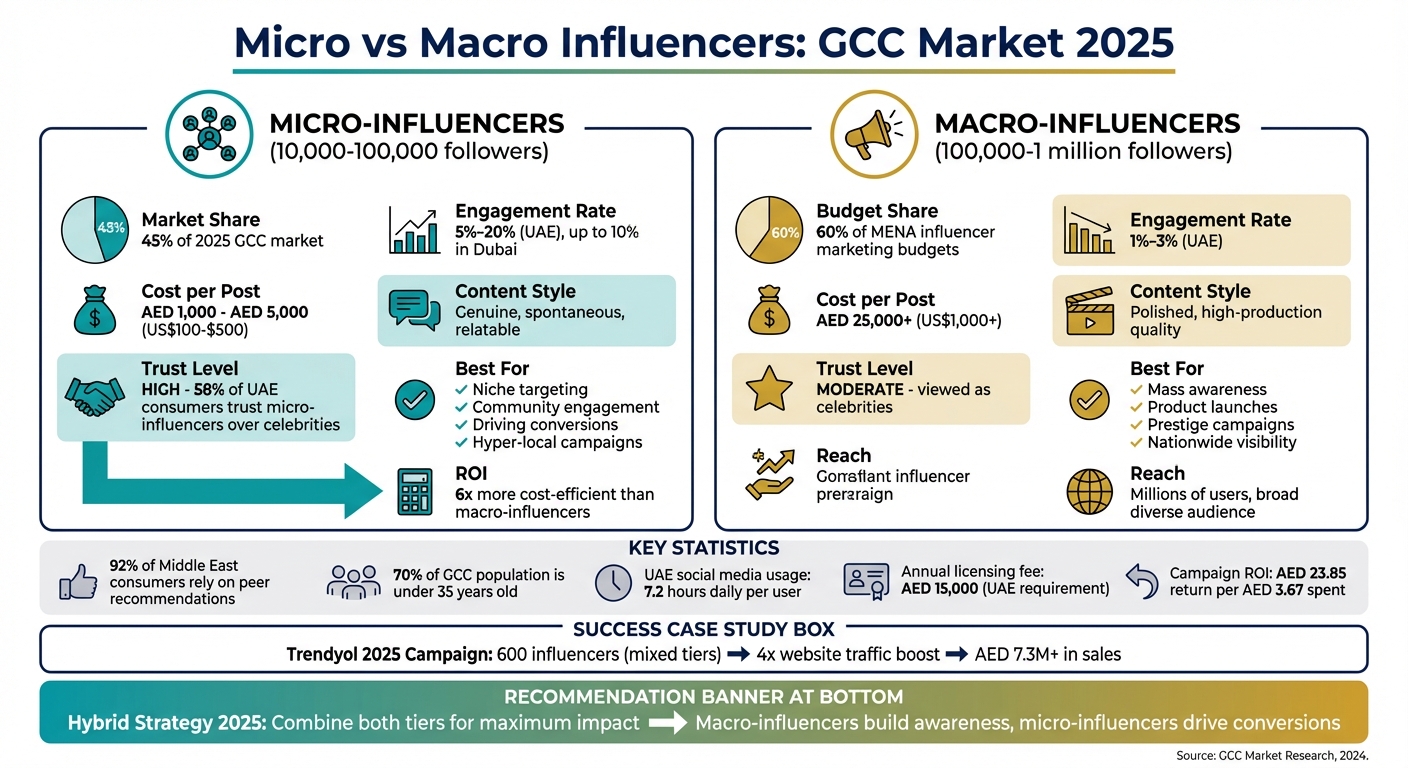
Micro vs Macro Influencers in GCC 2025: Engagement, Cost & ROI Comparison
In the GCC region, micro-influencers - those with 10,000 to 100,000 followers - accounted for 45% of the 2025 market share. While their audience size is smaller compared to macro-influencers, this concentrated reach works to their advantage in the culturally rich and diverse GCC market. They focus on hyper-local content, such as Dubai's Business Bay, halal wellness trends, or Emirati cuisine, which strikes a chord with audiences seeking content that feels authentic and relevant. This laser-focused targeting often leads to highly engaged audiences.
Micro-influencers in the GCC boast engagement rates of 3% to 8%, with some creators in Dubai reaching as high as 10%. This is significant, especially considering that nearly 92% of consumers in the Middle East rely on peer recommendations when deciding what to buy. Their relatable, peer-like personas resonate strongly with the UAE's youthful population, where 70% of people are under the age of 35. This connection fosters genuine interactions and performs well with social media algorithms.
Micro-influencers charge between US$100 and US$500 per post, making them six times more cost-efficient compared to macro-influencers while delivering comparable traffic. The AED 15,000 annual licensing fee required in the UAE further formalises this influencer tier, adding a layer of professionalism. For brands operating in niche industries like fintech, healthcare, or B2B services, micro-influencers offer the precision that broader campaigns might lack. Their affordability and targeted approach create valuable opportunities for businesses looking to maximize returns.
Micro-influencers excel at driving purchase decisions, particularly through community-focused recommendations - a modern take on the Arab tradition of word-of-mouth marketing. Brands often leverage their influence for hyper-local campaigns on platforms like Instagram and TikTok, zeroing in on specific neighbourhoods or interests. The early-2025 launch of TikTok Shop in Saudi Arabia and the UAE has further enhanced their role, allowing brands to convert engagement into direct sales almost instantly.
Macro-influencers, those with follower counts ranging from 100,000 to 1 million, offer extensive exposure across the GCC region. While they don't dominate the influencer market in terms of numbers - micro-influencers hold 45% of the market share - they excel when it comes to nationwide visibility and large-scale awareness campaigns. Industries like travel, fitness, and beauty particularly benefit from their ability to merge broad exposure with a touch of personal relatability. Considering that over 70% of the GCC population is under the age of 35 and social media usage in the UAE averages a staggering 7.2 hours daily per user, macro-influencers effectively reach a vast, digitally savvy audience.
However, this wide-reaching influence often comes at the expense of deeper engagement.
While their reach is undeniable, macro-influencers in the GCC typically achieve engagement rates between 1% and 2%, which is noticeably lower than the rates seen with micro-influencers. As their follower base grows, the personal connection with their audience tends to weaken. Despite this, macro-influencers still command 60% of influencer marketing budgets in the MENA region. This is largely driven by cultural preferences in the GCC, where status and authority carry significant weight. In a region where social figures and lifestyle icons are highly influential, macro-influencers remain a go-to choice for brands seeking prestige over intimate community interaction. To address the engagement gap, many brands strategically combine macro- and micro-influencers to balance broad reach with meaningful audience engagement.
The cost of working with macro-influencers is steep, with rates starting at US$1,000 per post. Additionally, UAE regulations require an annual AED 15,000 licensing fee, making them six times more expensive than micro-influencers for similar levels of traffic. For brands with larger budgets - such as those in luxury, fashion, or government initiatives like Saudi Vision 2030 - this high cost is justified by the visibility and prestige macro-influencers deliver. On the other hand, smaller businesses often achieve better returns by combining influencer tiers, using macro-influencers for creating top-of-funnel awareness and micro-influencers for driving conversions. This tiered approach allows brands to optimize their marketing spend effectively.
Macro-influencers excel in large-scale campaigns aimed at building brand awareness and positioning luxury products. For example, TikTok Shop's 2025 launch in Saudi Arabia and the UAE enabled macro-influencers to seamlessly incorporate shoppable links into their content. A notable success story comes from digital agency Boomerang.ae, which ran a campaign for BYD's Seal and Song Plus models in the UAE. The campaign generated an impressive 3 million views in just two days, surpassing its 2 million view target. Increasingly, brands in the GCC are favouring long-term partnerships with influencers rather than one-off posts, as sustained collaborations help build trust and loyalty in the region. To maximize results, many campaigns now pair macro-influencers for widespread reach with micro-influencers for targeted engagement, creating a well-rounded and effective marketing strategy.
Micro- and macro-influencers each bring distinct benefits depending on a brand's campaign goals, budget, and audience. Micro-influencers are great for fostering trust and driving conversions within niche communities, while macro-influencers deliver widespread visibility across the GCC's diverse markets. Striking the right balance between these options helps brands make the most of their marketing budgets. Below, we explore the key differences in cost, reach, and trust between these influencer tiers.
The engagement levels between the two groups vary significantly. For instance, 58% of UAE consumers trust recommendations from micro-influencers over celebrity endorsements. This makes micro-influencers especially effective for authentic product reviews and community-focused campaigns.
When it comes to cost, the contrast is sharp. Micro-influencers typically charge between AED 1,000 and AED 5,000 per post, making them an affordable choice for smaller budgets. On the other hand, macro-influencers often charge AED 25,000 or more per post, justifying their rates with professionally produced content and the ability to reach millions in one go.
Here’s a quick comparison of the two tiers:
| Feature | Micro-Influencers (5,000–100,000) | Macro-Influencers (100,000–1,000,000+) |
|---|---|---|
| Audience Reach | Niche, hyper-local, highly targeted | Broad, diverse, mass-market reach |
| Engagement Rate | High (5%–20% in UAE) | Lower (1%–3% in UAE) |
| Cost per Post | AED 1,000–AED 5,000 | AED 25,000+ |
| Trust Level | High; seen as relatable and trustworthy | Moderate; viewed more as celebrities |
| Content Style | Genuine, spontaneous, relatable | Polished, high-production quality |
| Best For | Driving conversions, building communities, niche targeting | Boosting brand awareness, product launches, large-scale campaigns |
| Management Effort | Higher; requires coordinating multiple influencers | Lower; fewer creators involved |
Many GCC brands are now blending both types of influencers for maximum impact. For example, Trendyol’s 2025 expansion campaign utilized 600 influencers across tiers. This strategy led to a 4× boost in website traffic and over AED 7.3 million in sales. By combining the broad reach of macro-influencers with the authentic engagement of micro-influencers, brands can optimize their return on investment across different campaign stages.
Choose influencer types based on what your campaign needs to achieve. If your goal is to build trust, boost conversions, or connect with niche audiences in the GCC, micro-influencers are an excellent choice. These influencers typically deliver engagement rates between 5%–20% and charge around AED 1,000 to AED 5,000 per post. However, for campaigns focused on mass awareness - like product launches or large-scale promotions - macro-influencers provide the wide reach and polished content necessary to connect with millions quickly. For campaigns with more complex goals, a hybrid approach combining both types can be highly effective.
Leading brands in 2025 are combining these tiers to guide customers through the entire sales funnel. Macro-influencers create buzz and awareness at the top of the funnel, while micro-influencers nurture engagement and drive conversions at later stages. This dual approach has already proven successful in generating both traffic and sales.
It’s also important to stay compliant with GCC regulations. Ensure that influencers hold the necessary Commercial and Media Licenses (costing between AED 5,000 and AED 15,000) and track campaign performance using unique promo codes or UTM parameters. GCC brands have reported returns as high as AED 23.85 for every AED 3.67 spent. By focusing on key metrics like saves, shares, and conversions - rather than just likes - you’ll be better equipped to measure and optimize your campaign’s ROI.
Finally, prioritize long-term partnerships over one-off collaborations. Building ongoing relationships with influencers fosters deeper audience trust and delivers more consistent results over time. Whether you opt for micro, macro, or a mix of both, the most important factor is aligning your strategy with your marketing objectives and focusing on what truly drives revenue.
To make the most of both micro and macro influencers, brands in the UAE should tap into the unique advantages each group offers.
Micro-influencers - with 5,000 to 100,000 followers - are perfect for building trust and connecting with niche audiences. Their content often feels more personal and relatable, leading to higher engagement rates and stronger connections, which resonate particularly well in the UAE market. On the other hand, macro-influencers, who boast 100,000+ followers, are better suited for reaching a larger audience and boosting brand visibility on a broader scale.
By combining these two types of influencers, brands can craft a multi-layered strategy. Macro-influencers can generate widespread excitement and awareness, while micro-influencers can focus on fostering meaningful interactions within specific communities. For the best results, ensure your messaging stays consistent across all influencers, tailor audience segmentation thoughtfully, and keep a close eye on performance metrics to refine your approach. This blend of reach and authenticity aligns seamlessly with the UAE's dynamic influencer marketing landscape, where genuine connections are key.
The cost of working with influencers in the GCC varies widely and depends on factors like their follower count, engagement rate, platform of choice, and the campaign’s scope. As of 2025, nano influencers (those with 1,000–10,000 followers) typically charge between AED 300 and AED 1,500 per post, while micro-influencers (with 10,000–100,000 followers) may charge anywhere from AED 1,500 to AED 10,000 per post. For macro and mega influencers, who have significantly larger audiences, campaign fees can reach into the tens of thousands of dirhams.
With influencer marketing gaining traction across the region, advertising spend in this sector is expected to hit approximately AED 1 billion by 2025. To make the most of your investment, it's crucial to focus on ROI and the quality of engagement. When planning your budget, ensure the influencer aligns with your campaign goals and connects with your target audience to maximize results.
Micro-influencers often enjoy stronger engagement rates because their followers view them as relatable and approachable. They build tight-knit, loyal communities where interactions feel personal, fostering a deeper sense of trust and connection.
On the other hand, macro-influencers typically have much larger audiences, but their content can sometimes feel more generic, which may result in lower engagement per follower. The personal touch that micro-influencers bring makes them especially effective for niche campaigns and reaching specific, targeted audiences.
16 MIN READ
14 MIN READ
11 MIN READ
What worked, what didn't, and what we're building next - no noise, unsubscribe anytime.