

Blog / AI Personalization for Gulf Retail: Case Studies
AI Personalization for Gulf Retail: Case Studies
AI is reshaping Gulf retail, driving customer engagement, better conversions, and revenue growth. Here's what you need to know:
- Consumer Shift: By 2025, 70% of UAE shoppers rely on AI for purchases - a 44% jump from 2024. Millennials and Gen Z lead adoption, with Gen X catching up fast.
- Retailer Challenges: 40% of consumers find generic ads irrelevant. Yet, only 18% feel they get value for the data they share.
- AI Solutions: Gulf retailers are using AI for tailored promotions, virtual try-ons, and real-time analytics to address this gap.
Key Examples
- Carrefour UAE: Personalised app offers boosted sales by 30%, with AI-driven demand forecasting reducing waste.
- L'Oréal Middle East: Virtual try-ons tripled conversions, with 27% of sales now online.
- The Dubai Mall: AI-based customer segmentation and digital signage improved sales by 20%.
- Chalhoub Group: Layla AI, a beauty assistant, increased conversions by 2.5× and session time by 7.4 minutes.
Quick Takeaway
AI personalisation is no longer optional for Gulf retailers. The focus is on using localised, data-driven tools to meet shopper expectations, reduce inefficiencies, and grow revenue.
Carrefour by Majid Al Futtaim
AI-Driven Mobile App for Real-Time Promotions
Carrefour's mobile app takes personalisation to the next level, offering tailored promotions based on each customer's purchasing habits, app usage, and browsing history. Imagine two shoppers in the same aisle - one might see a discount on organic produce, while the other gets an offer for household essentials. It's all about making every shopping experience unique.
In March 2021, Carrefour UAE teamed up with La Vache qui Rit® to test this data-driven approach. The results? A threefold increase in click-through rates and a 2:1 return on ad spend.
"We now predict both the likelihood and timing of customer conversion using our AdTech solution." – Hani Weiss, CEO, Majid Al Futtaim Retail
Between 2015 and 2019, Majid Al Futtaim expanded its data capabilities significantly, growing its data volume by 300% and speeding up processing times by three times with IBM Netezza Performance Server. By September 2021, Carrefour City+ launched at Mall of the Emirates, introducing a checkout-free shopping experience. Using 97 cameras and advanced computer vision, the store updates customers' virtual baskets in real time.
These innovations aren't just flashy - they're driving real results, improving both sales and customer loyalty.
Impact on Sales and Customer Retention
The impact of these AI-powered tools is undeniable. Programmatic advertising backed by AI has boosted conversion probability by 3x, while sales increased by an average of 30%. Meanwhile, technologies like self-checkout and computer vision have cut wait times by 30%. Decision-making is now twice as fast compared to manual processes, thanks to data-driven insights.
Serving over 750,000 customers daily across approximately 450 locations, Carrefour employs AI-based demand forecasting to ensure shelves are stocked with what shoppers need. This approach not only reduces waste by preventing overstocking but also keeps customers happy by ensuring product availability. It's a win-win for customer satisfaction and sustainability goals.
L'Oréal Middle East
AI for Skin Tone and Product Matching
L'Oréal Middle East is embracing AI to deliver personalised beauty experiences tailored to the region's diverse skin tones and preferences. Building on the trend of Gulf retailers using AI for precision marketing, the company has introduced cutting-edge tools for product matching and consumer engagement. A standout in this effort is Modiface, an AR and AI platform that enables virtual try-ons for brands like YSL Beauty, Lancôme, and Essie. With just a smartphone camera, customers can preview makeup and hair colours before committing to a purchase.
But L'Oréal’s innovations don’t stop there. Their Beauty Genius assistant goes beyond virtual try-ons by analysing skin and hair through selfie scans. This generative AI tool provides personalised routines and product suggestions, leveraging an extensive database that includes 150,000 dermatologist annotations and over 11 million gigabytes of hair and skin data.
For luxury beauty enthusiasts, Lancôme’s Le Teint Particulier service uses advanced algorithms to create custom foundations. In just 20 minutes, it matches users with one of 72,000 possible combinations of shade, coverage, and hydration. Similarly, Kiehl's Instant Skin Reader scans faces to identify skin types and conditions, offering tailored product recommendations for specific skincare needs.
"Beauty is about individuality. Therefore, we have to cater every solution and every product to an individual's needs - the colour of their skin, the shape of their brow, or their hair colour." – Nicolas Hieronimus, CEO, L'Oréal
These technologies are redefining how consumers in the Gulf region experience beauty, delivering personalised solutions that resonate deeply with individual needs.
Reduction in Returns and Improved Customer Satisfaction
The results of these AI-driven innovations have been transformative. During the pandemic, the use of virtual try-on tools surged fivefold, leading to twice the engagement and three times the conversion rates. Worldwide, L'Oréal has logged over 1 billion virtual try-ons across its brands, with AI-powered product recommendations now accounting for 15% to 20% of sales in certain B2C categories.
A prime example of this success is L'Oréal Paris hair dye, which saw a staggering 336% increase in virtual try-ons after launching virtual consultations. This "try before you buy" approach has significantly reduced hesitation among shoppers, addressing common challenges like product returns and purchase uncertainty - a key concern for Gulf retailers. E-commerce sales for L'Oréal Middle East now make up more than 27% of the company’s global sales, with ambitions to push that figure to 50% in the future.
"Try-ons usage was up five times during the pandemic with twice the engagement and three times the conversion, which is a testament to the efficiency and likeability of this method amongst consumers." – Mehdi Moutaoukil, Chief Marketing Officer, L'Oréal Middle East
Additionally, L'Oréal leverages Salesforce Marketing Cloud to enhance the shopping journey. By automating abandoned cart emails and sending tailored product recommendations based on skin diagnosis results, the company ensures a seamless path from browsing to purchase.
These advancements not only improve customer satisfaction but also strengthen L'Oréal's position as a leader in personalised beauty solutions.
Emaar's The Dubai Mall
AI for Customer Segmentation and Foot Traffic Analysis
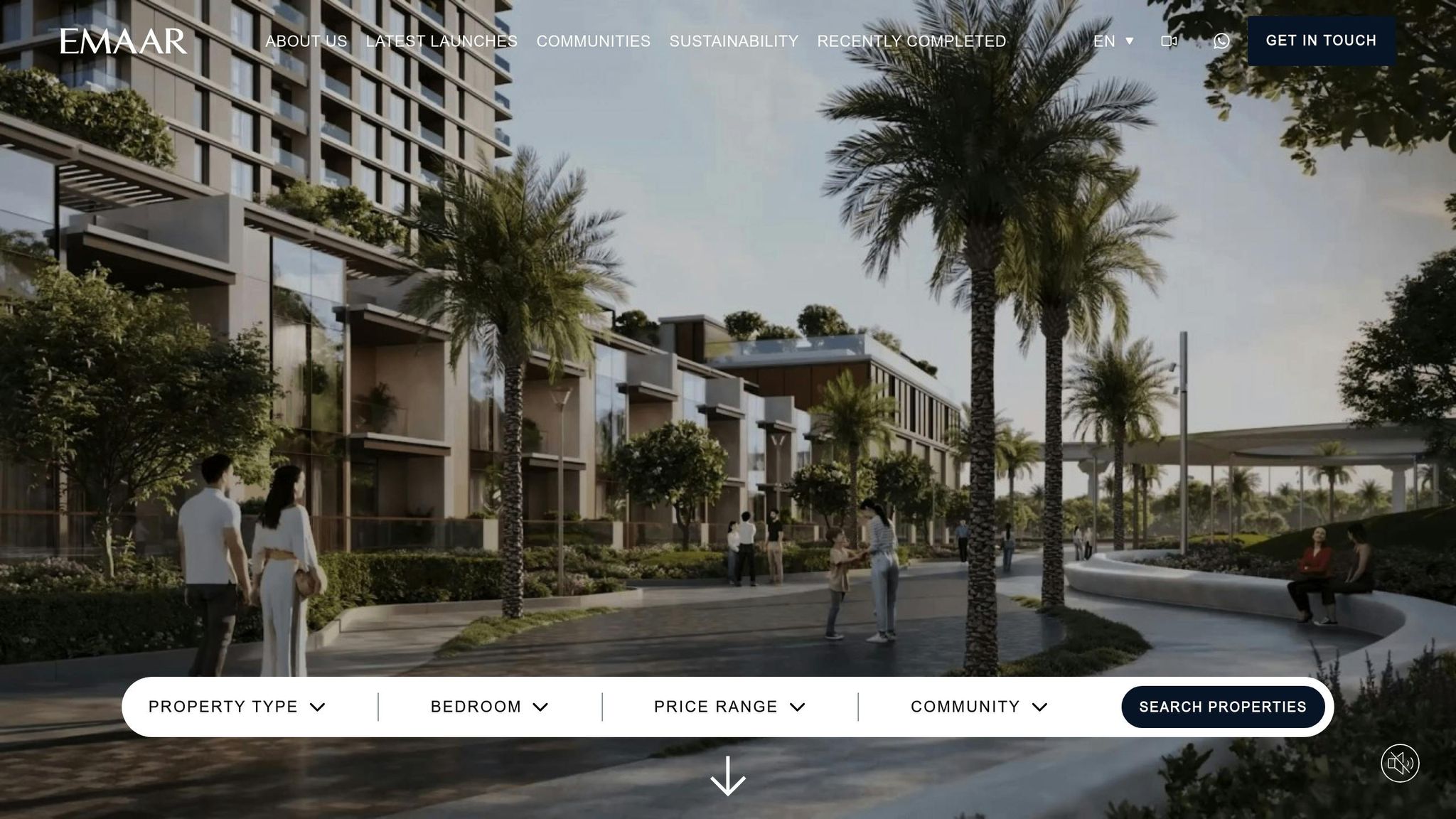
Emaar has embraced AI at The Dubai Mall to enhance customer experiences and streamline operations, aligning with the region's growing focus on personalisation. By analysing data from loyalty programmes and mobile apps, Emaar categorises visitors into key groups - international tourists, local residents, and regional shoppers. This segmentation enables the delivery of tailored offers that align with each group's preferences.
AI-powered real-time analytics also play a crucial role in tracking visitor flow and forecasting peak shopping times. This allows for dynamic adjustments to marketing strategies, ensuring campaigns are more effective. Research led by Shankar Subramanian Iyer in March 2025 revealed that AI-driven recommendations boosted sales conversions by 20%.
"AI allows us to anticipate customer needs and provide tailored experiences that no other mall in the region offers." – Stakeholder/Participant, Dubai Mall AI Study
Additionally, these systems predict crowd surges, enabling optimised staffing and resource allocation during busy periods. Beyond improving sales, these technologies pave the way for more advanced digital engagement strategies.
Digital Signage Personalisation
The Dubai Mall's digital signage network is another standout feature, using AI to adapt content in real time based on foot traffic patterns and demographic data specific to each zone. During major events like the Dubai Shopping Festival, promotional content is strategically targeted to areas most likely to reach the intended audience.
A prime example of AI's creative application is the mall's iconic fountain show. The system synchronises music, lighting, and water jets, drawing an audience of 100 million viewers on New Year's Eve. Additionally, location-based services send real-time promotions to shoppers, turning foot traffic insights into immediate sales opportunities.
sbb-itb-058f46d
Chalhoub Group
AI-Powered Personalisation Across Retail Networks
The Chalhoub Group operates over 950 stores, 52 e-commerce platforms, and partners with more than 450 international brands across eight countries. In October 2025, they introduced a groundbreaking innovation: Layla AI. This generative AI beauty coach, specifically designed for FACES, provides highly personalised recommendations for skincare, makeup, fragrances, and haircare - offering an experience comparable to in-store consultations.
What sets Layla AI apart is its localisation. It supports multiple Arabic dialects and Arabizi, catering to regional communication styles. This localised approach has been pivotal, as 79% of interactions occur in Arabic, with 85% of users in Saudi Arabia engaging with the platform regularly. The results speak volumes - Layla AI users experience 2.5× higher conversion rates, spend an additional 7.4 minutes per session, and explore 27% more products.
"Layla reflects our ambition to create seamless omni experiences, bridging in-store warmth with digital convenience... It is also a cornerstone of our ambition to shape the future of luxury retail through data and intelligence." – Michael Chalhoub, CEO, Chalhoub Group
Layla AI isn't just about customer engagement. It also acts as a powerful business intelligence tool, capturing real-time data on customer preferences and unmet needs. This data drives strategic decisions, influencing product selection, pricing strategies, and marketing efforts.
Meeting Luxury Segment Expectations
Chalhoub Group extends its use of AI beyond personalisation, addressing the high standards of the luxury market. In August 2024, their designer outlet, The Deal, launched the region's first back-to-school campaign entirely created with generative AI. Their in-house creative studio, OneStudio, utilised large language models to produce realistic campaign visuals - eliminating the need for traditional photo shoots.
"By integrating Gen AI into the creative process, we've enhanced efficiency while maintaining the high-quality visuals our customers expect." – Nick Vinckier, Director of Corporate Innovation, Chalhoub Group
This innovative use of AI showcases how technology can scale personalisation while retaining the sophistication expected in luxury retail. Looking ahead, Chalhoub plans to expand its AI capabilities to include advanced skin diagnostics, virtual try-ons, and gamification. These advancements are key components of their Vision 2033 strategy, spearheaded by The Greenhouse hubs in Riyadh and Dubai.
Key Lessons and Metrics from Gulf AI Case Studies

Gulf Retailers AI Personalization Results: Performance Metrics Comparison
Common Strategies Driving Success
The Gulf retailers showcased in these case studies share several effective strategies that have helped them achieve success with AI. One standout factor is linguistic localisation. For instance, Chalhoub's Layla AI achieved 79% of its interactions and 85% user engagement in Saudi Arabia by aligning with local cultural norms. This alignment fosters trust, which is essential for delivering personalised experiences.
Retailers like Carrefour and Majid Al Futtaim have shifted from broad demographic segmentation to using real-time decision engines. These engines analyse customer behaviour in the moment, enabling tailored offers, precise timing, and relevant content through reinforcement learning. By adopting a centralised data strategy, they also ensure quicker responses to market shifts.
Another key tactic is AI-powered conversational commerce, which combines the personal touch of in-store experiences with the convenience of digital platforms. This creates a seamless experience for customers, blending warmth with efficiency. Moreover, successful retailers have embraced a "learn fast, scale faster" philosophy. Instead of waiting for a perfect tech setup, they start with high-potential use cases, such as personalised search or push notifications, and expand from there.
These strategies collectively pave the way for tangible performance improvements, as highlighted in the metrics below.
Comparison of Measurable Outcomes
The table below highlights the measurable impacts of AI initiatives across different Gulf retailers:
| Retailer | AI Initiative | Conversion & Engagement | Operational Efficiency | Revenue Impact |
|---|---|---|---|---|
| Chalhoub Group (FACES) | Layla AI (Beauty Coach) | 2.5× higher conversion rates; +7.4 minutes session duration; 27% more products explored | - | Incremental revenue uplift |
| Majid Al Futtaim (Carrefour) | IBM Data Warehouse Modernisation | 2× faster marketplace impact | 3× faster data processing; 100% faster business request turnaround | - |
| L'Oréal Middle East | Generative AI Metadata Tagging | Boosted SEO across 500+ websites | 120,000 manual hours saved | - |
| Majid Al Futtaim Lifestyle | Machine Learning Recommendations | - | Reduced inventory waste | 12% revenue boost |
| Regional Retailer (Unnamed) | Personalised Marketing Campaigns | 8% to 10% revenue uplift vs. mass campaigns | - | 10% to 25% increase in ROAS |
These figures highlight how AI personalisation is driving real results in the Gulf region. From improving customer engagement to streamlining operations and boosting revenue, these initiatives underscore the importance of combining local relevance with precise technical execution. For Gulf retailers aiming to lead, AI is no longer optional - it’s becoming the standard.
Conclusion
Carrefour, L'Oréal, The Dubai Mall, and Chalhoub Group demonstrate how AI-driven personalisation has become a necessity for staying competitive. By combining deep cultural understanding with real-time data, these companies have achieved tangible results - stronger customer loyalty and noticeable revenue growth. As Bain & Company puts it:
"Using AI to create relevant, personalised marketing is no longer a competitive edge but table stakes - and it will be critical to building loyalty and market leadership that lasts".
These examples highlight actionable steps for retailers. First, creating a unified data hub is key - this allows customer information from all channels to be centralised. From there, focusing on high-impact applications, such as personalised push notifications and AI-powered product recommendations, can drive meaningful results. Adopting a "learn fast, scale faster" mindset is crucial: start with targeted experiments and expand based on proven outcomes rather than waiting for a perfect system. This iterative approach reflects the lessons from the case studies.
Another critical factor is linguistic localisation. For instance, 79% of interactions with Chalhoub Group's Layla AI occur in Arabic, showing the importance of tools that can navigate regional dialects and cultural subtleties. Pairing this understanding with seamless omnichannel experiences - blending digital efficiency with in-store engagement - meets the expectations of Gulf consumers today.
AI-powered campaigns have shown impressive results, delivering 10% to 25% increases in return on ad spend. Additionally, personalised marketing segments have boosted conversion rates by up to 50%. These figures underline the value Gulf retailers are unlocking by treating AI as a strategic investment rather than just a tool for automation.
Retailers that see AI personalisation as a transformative force will shape the future of the market. By being transparent about data usage, equipping teams to interpret AI insights, and focusing on meaningful customer experiences, businesses can turn AI into a long-term advantage. At Wick, we are committed to helping Gulf retailers build integrated digital ecosystems that fuel sustainable growth.
FAQs
How is AI-driven personalisation transforming customer engagement in UAE retail?
AI-driven personalisation is reshaping how retailers in the UAE engage with their customers by creating experiences tailored to individual tastes. Take the Chalhoub Group’s Layla AI, for instance. This generative AI beauty coach offers real-time product suggestions in regional Arabic dialects, leading to 2.5 times higher conversion rates compared to older digital tools. Other AI-powered innovations, such as product finders and content generators, are enabling brands to deliver truly 1:1 personalised experiences, ensuring offers are both timely and relevant.
Consumer behaviour in the UAE reflects this transformation. A striking 70% of shoppers now use AI to discover products, plan meals, or pick outfits, while 65% say AI helps them uncover unique brands. The impact on the retail sector is undeniable, with forecasts indicating that the value of AI services in GCC retail will grow from AED 5 billion today to an impressive AED 31 billion by 2028. Companies like Wick are instrumental in guiding retailers through this shift, helping them integrate AI into their digital frameworks to deliver seamless, tailored experiences that strengthen customer loyalty.
What challenges do Gulf retailers face when implementing AI-driven personalization?
Retailers in the Gulf region encounter a range of hurdles when trying to integrate AI-powered personalisation into their operations. One major issue is the lack of in-house expertise in areas like data analytics and AI development. This knowledge gap often slows progress, as businesses struggle to transition from traditional methods to more advanced, AI-driven strategies. On top of that, resistance to change within organisations can lead to a kind of inertia, making it even harder to move forward.
Another significant hurdle is the strict data-privacy regulations in the UAE. These laws, combined with consumer demands for transparency, create a complex compliance landscape that can delay implementation. Retailers must carefully navigate these rules to ensure they meet both legal requirements and customer expectations.
The financial aspect is also a concern. The high upfront costs associated with AI projects, paired with uncertainty around the return on investment (ROI), often make decision-makers cautious. This hesitation can slow down the adoption of AI technologies. Ethical considerations add another layer of complexity, as businesses must ensure their AI models are free from bias and used responsibly to safeguard their reputation.
Finally, moving AI solutions from small-scale pilot projects to full-scale operations presents another challenge. This step requires businesses to adopt an agile and quick-learning mindset, something many organisations find difficult to achieve.
To address these challenges, consultancies like Wick play a vital role. They provide expertise in data analytics, offer guidance on ethical AI practices, and deliver end-to-end personalisation solutions that align with UAE regulations. By partnering with such experts, retailers can speed up their AI adoption journey while staying compliant and protecting their brand integrity.
Why is linguistic localisation essential for AI-driven retail strategies in the Gulf?
Linguistic localisation plays a key role in shaping AI-driven retail strategies in the Gulf, ensuring that digital interactions genuinely connect with the region's diverse and culturally rich shoppers. For instance, AI systems that recognise and adapt to Arabic dialects, including the widely used Arabizi, can establish a sense of familiarity and trust. This connection often translates into greater engagement and higher conversion rates. Personalised product recommendations that incorporate local expressions, seasonal trends, and cultural nuances feel more relatable - almost like receiving advice from an in-store expert.
It also transforms how AI processes and applies consumer data. By aligning with local preferences - such as Arabic-centric content, the AED currency, and regional date formats - AI-powered offers and suggestions become far more relevant and impactful. This tailored approach not only enhances the shopping journey but also strengthens customer loyalty, encouraging repeat purchases. For Gulf retailers, linguistic localisation is more than a detail - it’s a strategic advantage.