

Blog / Ethical Marketing vs. Cultural Sensitivity in GCC
Ethical Marketing vs. Cultural Sensitivity in GCC
Marketing in the GCC requires more than just promoting products - it’s about respecting local norms while maintaining transparency. Businesses must balance ethical marketing, which prioritizes honesty and consumer protection, with cultural sensitivity, which aligns campaigns with regional values like Islamic principles and family focus. This dual approach is crucial in a region with strict regulations and a diverse population.
Key Takeaways:
- Ethical Marketing: Focuses on transparency, truthful claims, and compliance with laws like the UAE Consumer Protection Law and Cybercrime Law.
- Cultural Sensitivity: Ensures respect for Islamic values, gender roles, and local traditions, avoiding any content that may cause offense.
- Why It Matters: Non-compliance risks include fines, ad suspensions, or business closures. Adapting campaigns to local expectations is essential for trust and success.
- Intersection: Trust is built by combining ethical practices with messaging that resonates locally, especially during key events like Ramadan or National Days.
Quick Overview:
| Aspect | Ethical Marketing | Cultural Sensitivity |
|---|---|---|
| Focus | Honesty, transparency, ESG goals | Respect for local values, norms |
| Scope | Universal principles | Region-specific adaptations |
| Risks | Misleading claims, data breaches | Offending Islamic or local values |
| Regulatory Bodies | Consumer Protection Authorities | National Media Council (NMC) |
Conclusion: Success in GCC markets demands combining ethical marketing with respect for local values. Brands must navigate this balance carefully to build trust and avoid costly mistakes.
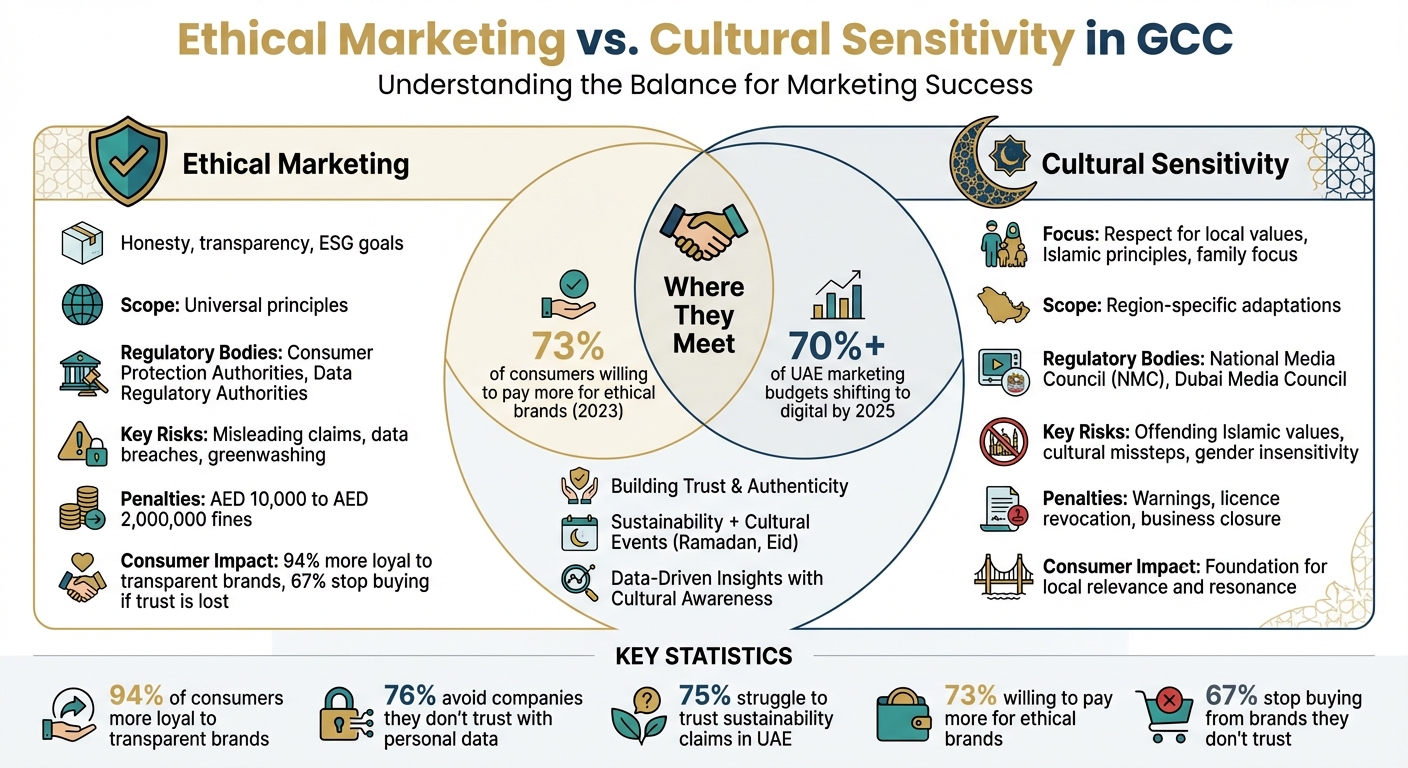
Ethical Marketing vs Cultural Sensitivity in GCC: Key Differences and Intersection
🌍 Global Sales Strategies: Culture, Confidence & Connection | Global Chamber® London
Core Principles of Ethical Marketing in GCC
Ethical marketing in the GCC revolves around strict adherence to local laws and regulations. In the UAE, advertisements must comply with laws such as the Printing and Publication Law, National Media Council (NMC) guidelines, Cybercrime Law, and consumer protection legislation. These legal frameworks are designed to ensure that marketing campaigns - from billboards to influencer promotions - respect local values and protect consumers. Below, we explore the key principles shaping ethical marketing in the region.
Transparency and Honesty in Claims
The Central Bank of the UAE's Consumer Protection Regulation (C 8/2020) mandates that licensed financial institutions present information clearly and openly, giving consumers ample time to review terms and conditions. This emphasis on clarity extends to all advertising, with regulators assessing violations based on how consumers perceive the information.
Studies reveal that 94% of consumers are more loyal to brands that prioritise transparency, while 76% avoid companies they don't trust with their personal data. In the UAE, all disclosures must be provided in both English and Arabic, and brands are prohibited from showcasing only favourable aspects while withholding crucial details until the point of sale. Beyond truthful claims, ethical marketing in the GCC also highlights social and environmental accountability.
Sustainability and Social Responsibility
Environmental, Social, and Governance (ESG) communications are becoming a cornerstone of ethical marketing, aligning with initiatives like UAE Vision 2030 and globally significant events such as COP28. The region's commitment to sustainability provides brands with a platform to showcase their dedication through transparent actions and measurable outcomes. In fact, 73% of consumers in 2023 expressed a willingness to pay more for products from brands committed to ethical practices.
Additionally, recent regulations on electronic advertising and data protection emphasise the responsible use of algorithms and require local data storage. These measures underline the importance of ethical practices in the digital marketing space.
Avoiding Deceptive Practices
Deceptive marketing carries severe repercussions in the GCC. In the UAE, penalties for unethical or illegal advertising can include revoking media licences, suspending operations, or even shutting down businesses entirely. In a market where trust is paramount, recovering from such breaches is extremely challenging. As Dženan Škulj aptly notes in Grudva:
Relationships are the lifeblood of commerce in the Gulf. Trust, built upon mutual respect and understanding, is the cornerstone of successful business ventures.
Misleading claims, including greenwashing, can also damage a brand's reputation. A survey found that 67% of consumers would stop buying from a company if they lost trust in it. To avoid such pitfalls, all marketing content, including influencer posts, must adhere to strict local standards. Brands should ensure the accuracy of their statements and data, consulting legal experts during the content creation process to navigate the discretionary power of local authorities.
Core Principles of Cultural Sensitivity in GCC
Cultural sensitivity in the GCC is about much more than just translating content - it requires a deep understanding of Islamic principles, family values, and community connections, which are central to daily life in the region. Brands that find success here know that aligning with these cultural norms isn't just a nice-to-have - it's the backbone of every successful campaign. These insights help illustrate how local values shape marketing practices.
Respect for Islamic and Local Values
In the GCC, marketing must steer clear of topics that conflict with Islamic teachings, such as alcohol, gambling, or imagery that violates modesty standards. Regulatory bodies like the National Media Council (NMC) and Dubai Media Council closely monitor advertisements, including influencer content, to ensure they meet these standards. Non-compliance can lead to serious consequences, such as official warnings, licence revocation, or even the closure of businesses.
Respect for gender roles and Arab identity is also paramount for local audiences. Ahlam Al Tamimi from Al Tamimi & Company underscores this importance:
In the United Arab Emirates in particular, advertisements should be sensitive to the cultural expectations and tolerances of the target audience within the context of the legal framework.
To avoid missteps, brands are advised to have their campaign materials reviewed by local cultural experts before launching.
Tailoring Visual and Verbal Messaging
Successful localisation in the GCC requires recognising regional preferences. For example, Saudi Arabia often leans towards formal, traditional Arabic, whereas the UAE adopts a more modern, cosmopolitan, and multilingual style. This understanding shapes not just the language used but also the visual elements of campaigns, ensuring they resonate with local audiences. Incorporating culturally significant motifs - like Arabic calligraphy, gold accents, or designs inspired by the Arabian desert or traditional embroidery - can make a big difference. Many global brands are even introducing "Arabised" products and designing stores that reflect traditional architecture to appeal to local sensibilities.
With the GCC boasting some of the highest social media usage rates worldwide - especially on platforms like Instagram, TikTok, and Snapchat - visual content must instantly connect with audiences who value authenticity and cultural relevance. By 2025, more than 70% of marketing budgets in the UAE are expected to focus on digital channels, making culturally aligned visual storytelling more crucial than ever.
Family-Centric and Community-Focused Messaging
The shared values of family, religion, and community are at the heart of successful campaigns across the GCC. Messaging that highlights themes like togetherness, generosity, and collective pride consistently outperforms generic approaches. Key cultural moments such as Ramadan, Eid, and National Days are prime opportunities for engagement, with brands often focusing on emotional storytelling around family gatherings or acts of charity.
Mr. Omar Abedin, Co-Author at Platform01 Consulting, captures this sentiment:
Cultural relevance is not optional – it's foundational. Understanding the emotional triggers that resonate with the GCC audience is critical for campaign success.
In sectors like luxury and real estate, marketing strategies are shifting towards private events and collaborations with influential community figures, rather than broad, mass-market campaigns. This reflects the region's high-context culture, which values personal relationships and community-driven narratives. These tailored approaches combine ethical awareness with a deep understanding of local culture, forming the cornerstone of successful campaigns in the GCC.
Key Differences Between Ethical Marketing and Cultural Sensitivity
Universal Principles vs. Regional Adaptations
Ethical marketing in the GCC follows global standards like ESG guidelines, sustainability themes, and responsible AI practices. These principles are consistent worldwide - whether you're operating in Dubai or Dublin, values like transparency and honesty are always essential.
Cultural sensitivity, on the other hand, is rooted in local traditions and norms. In the GCC, this means respecting Islamic values, embracing Arab identity, and being mindful of gender roles - factors that may not apply in other markets. For example, while a sustainability campaign might work globally with minor adjustments, running the same campaign in the GCC requires careful consideration of restrictions on nudity, suggestive content, or anything that could be seen as blasphemous. As Garant Business Consultancy aptly states:
Marketing in the UAE today is no longer just the art of promotion - it is the engineering of trust, technology, and cultural sensitivity.
This distinction underscores the need to approach cultural sensitivity with a focus on the region's unique identity.
Broad Morality vs. Contextual Relevance
Ethical marketing tackles broad moral issues that resonate globally, such as avoiding misleading claims, maintaining financial and health transparency, and safeguarding personal data. These principles are governed by international regulations.
Cultural sensitivity, however, demands a deep understanding of what is acceptable within the local context. Ahlam Al Tamimi from Al Tamimi & Company highlights this balance:
It is important to balance the value of the message against the risk of causing offence.
In the GCC, brands must integrate universal ethical practices with local cultural expectations. While ethical marketing ensures transparency and honesty on a global scale, cultural sensitivity requires precise Arabic translations and messaging tailored to avoid any missteps that could alienate the local audience. With a diverse population of over 200 nationalities in the UAE, successfully blending global ethics with local cultural awareness is key to earning consumer trust.
Comparison Table: Ethical Marketing vs. Cultural Sensitivity
| Feature | Ethical Marketing | Cultural Sensitivity |
|---|---|---|
| Primary Focus | Transparency, honesty, and social responsibility | Respect for Islamic values, local traditions, and social norms |
| Scope | Universal/Global (e.g., sustainability, data privacy) | Regional/Contextual (e.g., Arab identity, gender roles) |
| Regulatory Body | Consumer Protection Dept, Data Regulatory Authorities | National Media Council (NMC), Dubai Media Council |
| Key Risk | Greenwashing, deceptive claims, or data breaches | Cultural missteps, blasphemy, or offending public decency |
| Benefit | Builds long-term brand integrity and global reputation | Ensures local relevance, consumer resonance, and legal compliance |
These differences make it clear how ethical marketing and cultural sensitivity work together to create campaigns that resonate in the GCC. Ethical marketing lays the groundwork for global credibility, while cultural sensitivity ensures your message aligns with the local audience. To succeed in the GCC, brands must master both, combining universal principles with thoughtful, region-specific adaptations.
sbb-itb-058f46d
Where Ethical Marketing and Cultural Sensitivity Intersect in GCC
Authenticity and Trust
In the GCC, trust isn’t just a buzzword - it’s the backbone of successful marketing. It thrives on a careful mix of strict regulations and a deep understanding of local culture. As Garant Business Consultancy aptly states:
"Marketing in the UAE today is no longer just the art of promotion - it is the engineering of trust, technology, and cultural sensitivity".
This balance allows brands to build meaningful connections with their audiences. Ethical practices like transparency and honesty resonate strongly with local values. By combining clear regulatory disclosures with culturally relevant messaging - think authentic Arabic dialects or traditional design elements like gold accents and calligraphy - brands can establish trust that feels genuine. This harmony between ethics and cultural awareness is the foundation for campaigns that weave sustainability into messages that matter locally.
Campaigns That Combine Sustainability and Cultural Relevance
The growing emphasis on ESG (Environmental, Social, and Governance) goals in the GCC has created a space where ethical marketing and cultural sensitivity naturally blend. Events like Expo 2020 and COP28 have shifted sustainability from being a global concern to a regional priority. Campaigns that connect eco-friendly efforts with culturally significant occasions - such as highlighting charitable initiatives during Ramadan - create a deeper emotional resonance with audiences. By layering these strategies with data-driven insights, brands can further refine their approach for maximum impact.
Use of Data-Driven Insights
Ethical and culturally tailored marketing strategies are increasingly powered by data analytics, which helps brands decode emotional triggers and cultural preferences. Tools like AI and behavioural analytics allow marketers to move beyond broad messaging to create highly localised content. For example, predictive analytics can time campaigns perfectly for events like Ramadan or Eid, all while adhering to UAE data protection laws that prioritise transparency and ethical use of algorithms. As Harith Yas, a researcher at UTM, explains:
"Ethical AI governance is based on the main regulations, including the UAE Personal Data Protection Law, Cybercrime Law, Consumer Protection Law, and Digital Commerce Law. Such laws are focused on transparency, consent, and accountability in AI-driven marketing activities".
Real-time analytics also play a key role, enabling marketers to gauge audience sentiment as campaigns unfold. This allows them to quickly identify and correct any cultural missteps, ensuring that their messaging remains respectful and impactful.
Challenges and Risks in GCC Marketing Practices
Navigating ethical marketing in the GCC requires a careful approach to address both environmental concerns and cultural expectations. These challenges come with significant risks that require brands to tread cautiously.
Risks of Greenwashing
The GCC's growing focus on sustainability presents a tricky landscape for marketers. In the UAE, while there are no dedicated green marketing laws, consumer protection regulations strictly prohibit misleading or exaggerated environmental claims. This is a big deal - 75% of respondents in a UAE survey expressed difficulty trusting sustainability claims made by businesses and products. For instance, projects like "sustainable cities" have faced scrutiny for overstating their energy efficiency, a critical issue given that buildings accounted for 80% of the UAE’s energy consumption in 2016.
The financial stakes are just as serious. Under the UAE Consumer Protection Law (Federal Law No. 15 of 2020), fines for misleading advertisements can range from AED 10,000 to a staggering AED 2,000,000. Using unclear terms like "eco-friendly" without backing them up with data or certifications (such as LEED Gold) can lead to regulatory penalties. Advertising regulations explicitly prohibit false or misleading claims, exaggerations, or content aimed at discrediting competitors or deceiving consumers.
But the risks don’t stop at environmental claims - cultural sensitivity is another critical area that brands must navigate.
Avoiding Cultural Missteps
In the GCC, cultural insensitivity can do more than harm a brand's reputation - it can lead to campaigns being pulled entirely. Regulatory bodies like the National Media Council and Dubai Media Council hold the power to issue warnings, demand public apologies, or even revoke media licences for non-compliance. The challenge is that what constitutes "offence" can often be subjective. As Ahlam Al Tamimi from Al Tamimi & Company explains:
"Advertisements should be sensitive to the cultural expectations and tolerances of the target audience in addition to the legal framework governing the dissemination of advertising content."
Even small errors can have big consequences. For example, simple translation mistakes can miss cultural nuances, leading to unintended offence. A word-for-word translation might seem harmless but can fail to resonate - or worse, alienate - local audiences. To avoid such pitfalls, brands must rely on thorough reviews by regional experts and ensure legal vetting of their campaigns.
To address these risks effectively, brands need clear strategies, as summarised in the table below.
Risk Mitigation Table
| Risk Category | Common Pitfalls in GCC | Mitigation Strategy |
|---|---|---|
| Greenwashing | Using vague terms like "sustainable"; overstating eco-city benefits | Back up claims with measurable data; obtain third-party certifications like LEED Gold |
| Cultural Missteps | Imagery conflicting with Islamic values; poor localisation; gender insensitivity | Work with local creative teams; conduct cultural audits for all visual and verbal messaging |
| Regulatory Non-compliance | Operating without proper licences; undisclosed influencer partnerships | Obtain required advertising licences; enforce strict disclosure protocols |
| Legal/Financial | False claims or copyright violations | Consult legal experts to verify claims; ensure all messaging is accurate and unexaggerated |
| Criminal | Violating Cybercrime laws with prohibited content (e.g., gambling ads) | Review content against Cybercrime Law; assess all potential legal risks thoroughly |
Best Practices for Balancing Both in GCC Campaigns
Combining ethical marketing with cultural sensitivity in the GCC requires a thoughtful and structured approach. Brands need to respect universal values while tailoring their campaigns to align with local traditions and expectations. Here's how they can strike that balance.
Adapt Ethical Narratives to Local Contexts
Global ethical themes like sustainability or generosity don’t automatically connect with audiences in the GCC. To resonate, these ideas must reflect local values such as family, religion, and community. For instance, luxury brands have effectively incorporated the theme of "giving" into Ramadan campaigns by using regional motifs and Arabic calligraphy to create messages that feel culturally authentic.
This goes beyond simple translation - brands should fully adapt their messaging. For example, using specific dialects (a formal tone for Saudi Arabia versus a cosmopolitan style for the UAE) and aligning campaigns with key cultural events like Ramadan, the two Eids, and National Days can make a significant impact. Highlighting this, Mr. Omar Abedin from Platform01 Consulting states:
"Cultural relevance is not optional – it's foundational. Understanding the emotional triggers that resonate with the GCC audience is critical for campaign success."
Sustainability campaigns should focus on community stewardship, while social responsibility initiatives should highlight charity and generosity, especially during religious occasions. This tailored approach lays the groundwork for leveraging data insights effectively.
Use Data Analytics to Enhance Cultural Relevance
Once localised narratives are in place, data analytics can help fine-tune campaigns to better align with cultural expectations. With over 70% of marketing budgets in the UAE expected to shift towards digital channels by the end of 2025, personalisation is no longer optional - it’s essential. Brands can use AI to craft hyper-targeted campaigns, such as personalised Ramadan promotions, ensuring they meet cultural norms while staying within ethical boundaries.
Interactive tools like AR try-ons, polls, and gamification are excellent for gathering first-party data to improve personalisation. However, all data-driven campaigns must comply with NMC and Dubai Media Council standards. Additionally, algorithmic outputs should be reviewed by local experts to avoid cultural missteps.
As Garant Business Consultancy puts it:
"Marketing in the UAE today is no longer just the art of promotion - it is the engineering of trust, technology, and cultural sensitivity."
Wick's Four Pillar Framework: A Holistic Approach
To balance ethical marketing with cultural sensitivity, an integrated digital strategy is key. Wick's Four Pillar Framework provides a cohesive model for achieving this balance:
- Build & Fill: Develop culturally relevant websites and create tailored content.
- Plan & Promote: Design SEO strategies and paid campaigns that adhere to NMC regulations.
- Capture & Store: Use data analytics to map customer journeys while complying with the 2024 data protection regulations.
- Tailor & Automate: Implement AI-driven personalisation that respects cultural nuances.
This framework ensures that legal compliance, cultural understanding, and technological expertise come together to create authentic and engaging campaigns. By following this model, brands can navigate the complexities of GCC markets while maintaining trust and relevance.
Conclusion
Thriving in the GCC market takes more than simply replicating global marketing strategies. Brands need to understand that cultural relevance is at the core of success. The region’s unique mix of tradition and modernity calls for campaigns that respect Islamic values, highlight family-oriented themes, and foster a sense of community. At the same time, these efforts must seamlessly integrate digital advancements and reflect sustainability-driven narratives.
In the UAE, where digital channels dominate marketing budgets, brands operate under the watchful eyes of both consumers and regulators. Missteps - whether through regulatory non-compliance or superficial campaigns - can lead to fines, licence revocations, or even long-term reputational harm. Audiences are quick to spot insincere attempts to capitalise on cultural moments like Ramadan, demanding authenticity and genuine engagement instead.
Building trust is non-negotiable. As Garant Business Consultancy aptly states:
Marketing in the UAE today is no longer just the art of promotion - it is the engineering of trust, technology, and cultural sensitivity.
This requires a combination of AI-powered personalisation, a deep understanding of local culture, and data-driven insights that tap into emotional connections. For brands, this isn’t just about crafting effective marketing campaigns - it’s a critical strategic priority.
In such a dynamic and high-stakes environment, having the right expertise can make all the difference. Businesses navigating this complex space can benefit significantly from specialised guidance. By leveraging its Four Pillar Framework, Wick provides tailored solutions to help brands align ethical practices with cultural nuances, creating digital ecosystems that foster long-lasting trust in GCC markets.
FAQs
How can brands create marketing campaigns that are both ethical and culturally sensitive in the GCC?
To ensure marketing campaigns align with ethical standards and respect local values in the GCC, brands must strike a balance between transparency and cultural awareness. This begins with strict adherence to advertising regulations, such as avoiding misleading claims, including clear disclaimers, and complying with the guidelines set by authorities like the National Media Council (NMC).
Being culturally aware means understanding and respecting Islamic values and social norms. For instance, avoid using imagery that could be considered provocative, portray women in a respectful manner, and tailor campaigns to significant periods like Ramadan by focusing on themes such as family, unity, and generosity. Collaborating with local influencers and conducting in-depth market research can also help create campaigns that resonate with the audience in the region.
Practical considerations include using the local currency د.إ (e.g., د.إ 1,250), formatting dates as dd/MM/yyyy (e.g., 15/04/2025), and applying metric units for measurements. By combining ethical marketing practices with cultural respect, brands can build trust and establish meaningful connections with GCC audiences.
What are the risks of ignoring ethical marketing and cultural sensitivity in the GCC region?
Failing to follow ethical marketing practices and respect cultural sensitivities in the GCC can expose businesses to several serious risks.
First, there are legal repercussions. In the UAE, marketing activities are closely monitored by authorities like the National Media Council (NMC) and Dubai Media Council. Violating their strict regulations - especially on sensitive subjects such as religion, politics, alcohol, and healthcare - can lead to fines, suspension of advertising licences, or even legal proceedings.
Second, there’s the risk of reputation damage. Campaigns that fail to align with local values, include inappropriate visuals, or disregard cultural norms can spark public outrage. This might result in consumer boycotts, negative social media coverage, and a loss of trust, all of which can hurt sales and market position.
Finally, businesses could face financial setbacks. Regulatory fines, the expense of reworking campaigns, and difficulties in collaborating with local influencers or gaining government support can significantly impact growth. In a region where adherence to ethical and cultural standards is paramount, these missteps can be costly.
How does data analytics improve culturally sensitive marketing strategies in the GCC?
Data analytics empowers marketers in the GCC to design campaigns that genuinely connect with their audiences by revealing distinct preferences and behaviours. By examining data like website activity, social media engagement, and shopping habits, brands can craft messages that speak directly to various groups, including Emirati nationals, expatriates, and different age brackets. This allows campaigns to reflect local traditions, such as Ramadan-themed promotions or family-centric storytelling, while ensuring the use of the right language - be it Arabic or English.
Moreover, prioritising strong data governance fosters trust by ensuring that personal information is handled transparently and responsibly. This not only enhances the relevance of products and services but also builds lasting brand credibility in the UAE, where trust plays a vital role in consumer relationships. By blending cultural awareness with actionable data, businesses can drive better engagement and achieve sustainable growth throughout the Gulf region.